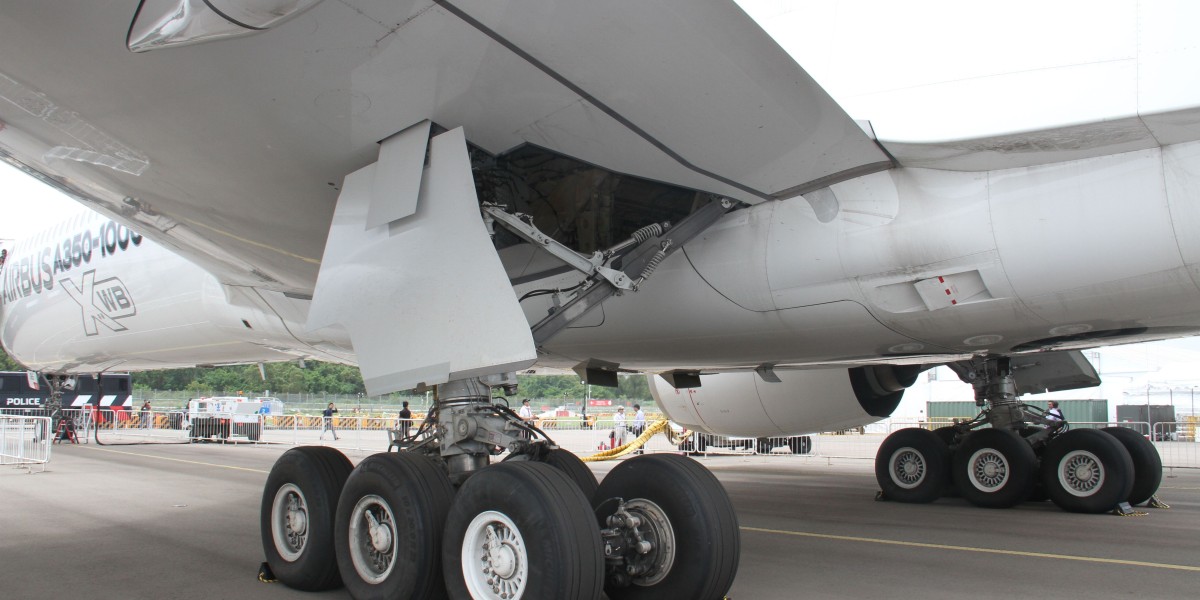

The Landing Gears Undercarriage Market is becoming increasingly important as aircraft manufacturers pursue innovative designs that combine operational reliability, improved efficiency, and advanced technology. Landing gear systems are responsible for supporting aircraft during ground operations and managing the physical demands associated with taxiing, takeoff, and landing. Because of these responsibilities, landing gear remains a critical area of aerospace engineering and manufacturing.
The growing need for aircraft landing gear solutions is encouraging manufacturers to develop systems that can meet changing aircraft requirements. Modern landing gear combines structural components with braking, steering, shock absorption, actuation, retraction, and monitoring functions. Each part needs to operate reliably as part of an integrated system, creating strong demand for specialized engineering and manufacturing capabilities.
One of the key areas of innovation is landing gear weight optimization. Aircraft manufacturers continuously examine ways to reduce overall aircraft weight while maintaining safety and structural performance. Landing gear represents an important opportunity because its components must be strong enough to manage significant mechanical demands. Engineers therefore evaluate materials, structural configurations, manufacturing methods, and component geometries to develop efficient designs.
Reliability remains equally important. Landing gear experiences repeated operational cycles and can be exposed to challenging environmental conditions. Components must be capable of maintaining their performance while experiencing mechanical loads, vibration, temperature variations, moisture, and runway-related contaminants. Manufacturers therefore emphasize careful material selection, manufacturing precision, inspection, testing, and quality assurance.
The role of advanced manufacturing is becoming increasingly significant. Digital design tools allow engineers to create and evaluate complex components before production. Simulation technologies can help assess structural behavior and identify opportunities for optimization. Automated manufacturing and inspection technologies can also support consistent production and help maintain the quality standards required for aerospace applications.
Landing gear suppliers are also exploring opportunities associated with intelligent maintenance. Sensors and digital monitoring technologies can provide useful information about component condition and system performance. This information can help operators and maintenance organizations make better decisions about inspections and servicing. Over time, data-driven maintenance approaches could contribute to more efficient aircraft lifecycle management.
The aftermarket continues to support demand for landing gear-related products and services. Aircraft operators require maintenance support throughout the service life of their fleets. Components may require inspection, repair, refurbishment, or replacement as part of regular maintenance activities. This creates opportunities for specialized organizations with expertise in landing gear servicing and component management.
The defense sector provides additional opportunities for landing gear manufacturers. Military aircraft can have specialized operating requirements, including the need for durable systems capable of supporting demanding missions. Landing gear may need to accommodate different aircraft structures and operating environments. Suppliers must therefore develop systems that combine strength, reliability, maintainability, and aircraft-specific functionality.
Emerging aviation concepts are also contributing to innovation. New aircraft configurations can require alternative approaches to landing gear design. Electric aircraft, advanced air mobility platforms, unmanned aircraft, and specialized aviation systems may have unique requirements relating to weight distribution, space, actuation, and ground operations. These developments provide opportunities for manufacturers to create new landing gear architectures.
Environmental considerations are becoming more prominent across aerospace manufacturing. Landing gear suppliers can support sustainability through longer-lasting components, efficient manufacturing processes, improved material utilization, and refurbishment programs. Designing components with lifecycle considerations in mind can help reduce unnecessary replacements and improve resource efficiency.
Another important factor is supply chain resilience. Aerospace manufacturers rely on specialized suppliers for landing gear components and assemblies. Precision production capabilities, quality management, material availability, and technical expertise can all influence the reliability of the supply chain. Companies that maintain strong manufacturing capabilities and dependable supplier relationships may be better positioned to serve aircraft programs.
The Landing Gears Undercarriage Market is therefore closely connected with the broader evolution of aircraft manufacturing. Future landing gear systems are expected to reflect greater integration between mechanical engineering, advanced materials, digital technologies, manufacturing automation, and lifecycle maintenance. The objective will remain consistent: providing dependable systems that support aircraft safely and efficiently on the ground.
As aviation continues to develop, landing gear manufacturers will face new technical requirements and opportunities. Continued investment in engineering capabilities, production technologies, maintenance services, and innovative component design can help companies respond to these changing needs. The combination of aircraft fleet development, emerging aviation platforms, aftermarket requirements, and technological advancement will continue to shape the direction of the Landing Gears Undercarriage Market.
FAQs
What is shaping the future of the Landing Gears Undercarriage Market?
Aircraft innovation, advanced materials, digital engineering, manufacturing technologies, maintenance requirements, emerging aircraft platforms, and the focus on efficient designs are shaping the market.
How can manufacturers improve modern landing gear systems?
Manufacturers can focus on structural optimization, reliable materials, precise manufacturing, improved actuation and braking, intelligent monitoring, efficient maintenance, and lifecycle-oriented design.