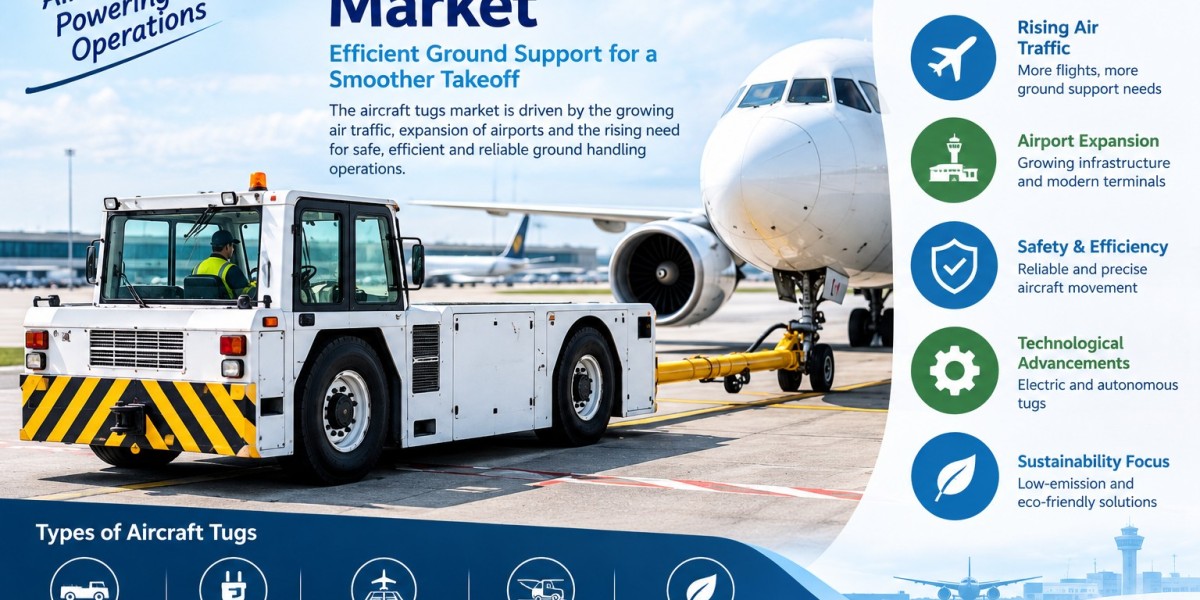

Sustainability is becoming an increasingly visible consideration in aviation, and ground operations are part of this wider transformation. Aircraft tugs are among the vehicles being evaluated as airports and ground handling organizations explore cleaner and more efficient equipment. These vehicles perform essential aircraft movement activities, making them an important area for modernization. The aircraft tugs market is consequently developing through changes in propulsion, vehicle design, energy management, and operational technology.
One area receiving growing attention is electric aircraft ground support equipment, which includes equipment designed to perform airport support activities using electric power. Electric aircraft tugs can provide an alternative to conventional fuel-powered towing vehicles. Their potential advantages include quieter operation and reduced direct emissions during use. At the same time, successful deployment requires suitable charging facilities, appropriate battery capacity, and operating procedures that match the equipment's capabilities.
Sustainable tug development is not simply about replacing one power source with another. Manufacturers also need to consider the complete operating environment. Aircraft tugs work outdoors and may encounter different weather conditions, surface conditions, workload patterns, and operating schedules. Electric systems must therefore be designed for dependable performance under practical airport conditions. Battery durability, charging management, thermal considerations, and maintenance are all important parts of the equipment lifecycle.
Energy management can become especially important when multiple electric tugs are deployed. Ground handling organizations may need several vehicles operating during busy periods. Charging must be organized so that equipment remains available when required. Smart charging approaches and effective fleet scheduling may help operators coordinate energy use with operational demand. This creates opportunities for digital tools that combine equipment monitoring with fleet planning.
Another sustainability-related consideration is equipment lifecycle management. Extending the useful life of a tug through preventive maintenance can reduce unnecessary equipment replacement. Regular servicing can help maintain performance and identify worn components before they cause significant operational problems. Manufacturers that support repairability, component availability, and practical maintenance can help operators manage equipment throughout its working life.
Electric propulsion can also influence operator experience. Reduced engine noise can create a different working environment for personnel operating around airport ramps. Lower noise levels may be particularly useful in areas where many ground vehicles operate simultaneously. Improved operator comfort, visibility, and control can complement propulsion improvements and contribute to a more modern ground support vehicle design.
Automation and connectivity may further support sustainable operations by helping organizations use equipment more efficiently. A connected tug can potentially provide information about operating time, energy consumption, maintenance status, and utilization. Fleet managers can use this information to understand how vehicles are being used and identify opportunities to improve scheduling. Better utilization can support operational efficiency while reducing unnecessary equipment downtime.
The transition toward sustainable aircraft tugs also creates challenges. Electric equipment can require changes to airport infrastructure, including charging facilities and electrical capacity. Operators may need new maintenance skills and procedures for battery-powered systems. Initial procurement considerations may also differ from those associated with conventional equipment. These factors mean that each airport or ground handling organization needs to evaluate electrification according to its own operational circumstances.
Despite these challenges, sustainability is likely to remain an important consideration in future tug development. Airports are increasingly examining the environmental impact of ground equipment alongside operational performance. This encourages manufacturers to explore electric, hybrid, and other alternative solutions while improving conventional equipment efficiency.
Aircraft tugs can also contribute to broader airport modernization initiatives. When towing equipment is integrated with digital fleet systems, maintenance platforms, and energy management processes, it becomes part of a more connected ground operation. This approach can help organizations move toward coordinated equipment management instead of treating each vehicle as an independent asset.
The aircraft tugs market is therefore evolving around a combination of sustainability, efficiency, safety, and technology. Electric propulsion, battery management, connected monitoring, improved maintenance, and ergonomic vehicle design are shaping the direction of product development. As airports and aviation operators continue to modernize their ground infrastructure, aircraft tugs will remain an essential component of aircraft movement while adapting to new operational and environmental expectations.
FAQs
FAQ 1: Why are electric aircraft tugs gaining attention?
Electric aircraft tugs can provide quieter operation and reduce direct emissions during use, making them relevant to organizations exploring cleaner ground support solutions.
FAQ 2: What challenges can airports face when adopting electric aircraft tugs?
Challenges can include charging infrastructure, energy planning, battery management, maintenance requirements, operator training, and integration with existing ground operations.