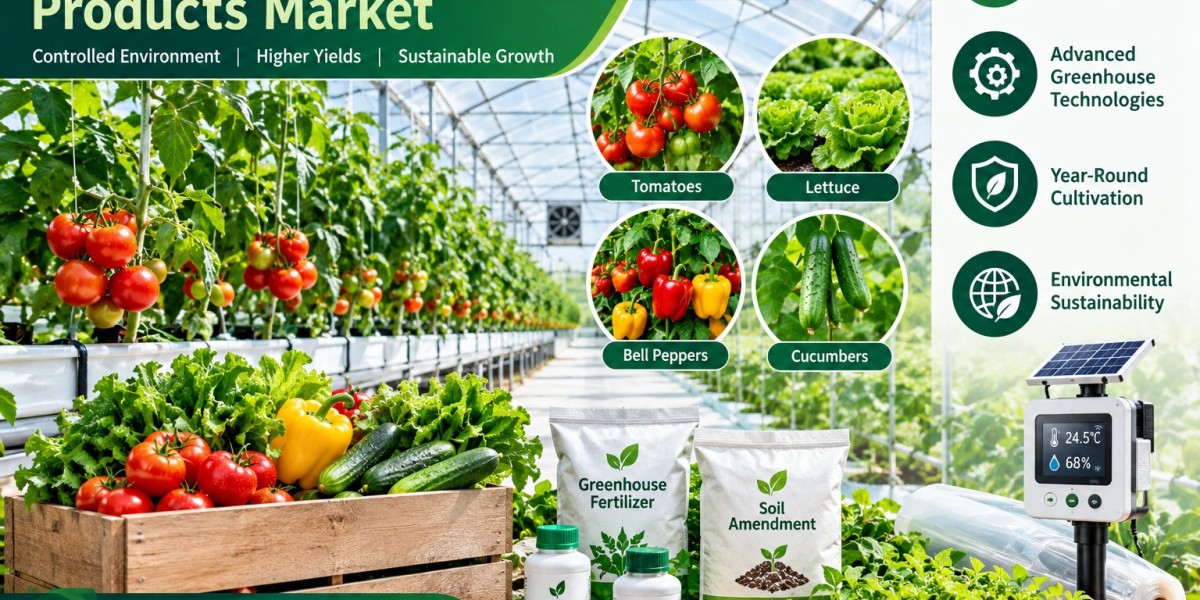

The greenhouse agricultural products market is becoming an important part of modern farming as growers look for practical ways to cultivate crops under more controlled conditions. Greenhouse production creates a protected growing environment where farmers can manage important factors surrounding plant development while reducing direct exposure to unpredictable outdoor conditions. This approach supports the cultivation of vegetables, fruits, herbs, flowers, seedlings, and other agricultural products in a structured environment. As farming practices continue to evolve, greenhouse cultivation is attracting attention because it connects agricultural production with technology, resource management, crop quality, and changing consumer expectations.
One of the important concepts associated with this market is protected cultivation systems, which allow growers to create a more suitable environment for crops while maintaining greater control over growing conditions. Greenhouses can be designed according to crop requirements, local climate conditions, available space, and production objectives. This flexibility makes greenhouse agriculture useful for both commercial growers and smaller farming operations seeking to improve the consistency of their production.
Greenhouse agricultural products cover a broad range of crops. Vegetables are commonly associated with protected farming because their growth can benefit from carefully managed temperature, moisture, light, and ventilation. Tomatoes, cucumbers, peppers, leafy vegetables, and herbs can be cultivated in greenhouse environments, while fruit crops and specialty plants can also be selected according to the characteristics of a particular growing facility. Flowers and ornamental plants represent another important area because greenhouse structures can provide a protected environment for crops that require careful handling and consistent cultivation practices.
A major characteristic of greenhouse agriculture is the ability to organize production around specific crop requirements. Instead of depending entirely on naturally occurring weather conditions, growers can use greenhouse structures to influence the surrounding growing environment. Ventilation, irrigation, shading, humidity management, and other practices can be coordinated to support plant development. This creates opportunities for more planned cultivation and can help growers respond to market requirements with greater flexibility.
Technology is also changing the way greenhouse agricultural products are produced. Modern greenhouse operations can incorporate monitoring equipment, automated irrigation, climate-management systems, sensors, and other tools that assist farmers in observing crop conditions. These technologies can make agricultural activities more organized by helping growers understand changes inside the growing environment. Automation can also reduce the need for repetitive manual activities, allowing farm workers to concentrate on crop care, harvesting, quality inspection, and other important tasks.
Resource management remains another important consideration for greenhouse growers. Water, growing space, nutrients, energy, and labor all influence agricultural production. Greenhouse systems provide opportunities to organize these resources around the needs of individual crops. Irrigation can be planned according to crop requirements, while growing systems can be adjusted to make efficient use of available space. Such practices are particularly relevant for growers who want to combine productivity with responsible resource management.
Consumer expectations are also influencing the development of greenhouse agricultural products. Buyers increasingly look for fresh, consistent, attractive, and carefully produced agricultural products. Retailers, food businesses, restaurants, and direct-to-consumer sellers can benefit from dependable supplies of horticultural products. Greenhouse farming can support planned cultivation schedules, helping producers coordinate harvesting with distribution and sales activities.
Another notable opportunity is crop diversification. Traditional farming operations may depend heavily on a limited number of crops, while greenhouse cultivation can provide an environment for experimenting with different horticultural products. Growers can evaluate crops based on market demand, production requirements, available infrastructure, and local consumer preferences. This flexibility can encourage agricultural businesses to explore specialty vegetables, herbs, flowers, nursery plants, and other higher-value products.
The future of the greenhouse agricultural products market will increasingly depend on the combination of farming knowledge and practical technology. Farmers are likely to focus on systems that are easier to monitor, more adaptable to different crops, and better aligned with resource-management goals. At the same time, greenhouse design, crop selection, irrigation practices, automation, and post-harvest handling will remain important parts of the overall production process.
As agriculture continues to adapt to changing environmental and commercial conditions, greenhouse production offers a structured approach to crop cultivation. Its emphasis on protection, planning, controlled growing conditions, and product consistency makes it an important area of modern horticulture. The greenhouse agricultural products market therefore represents not only a farming method but also an evolving production model where technology, crop management, and consumer needs come together.
FAQs
1. What are greenhouse agricultural products?
Greenhouse agricultural products are crops cultivated inside protected structures where growers can manage growing conditions more closely. They can include vegetables, fruits, herbs, flowers, nursery plants, and other horticultural products.
2. Why is greenhouse cultivation important for modern agriculture?
Greenhouse cultivation provides growers with greater control over the growing environment and supports planned crop production. It can also help farmers manage resources, diversify crops, and produce agricultural products in a more structured manner.