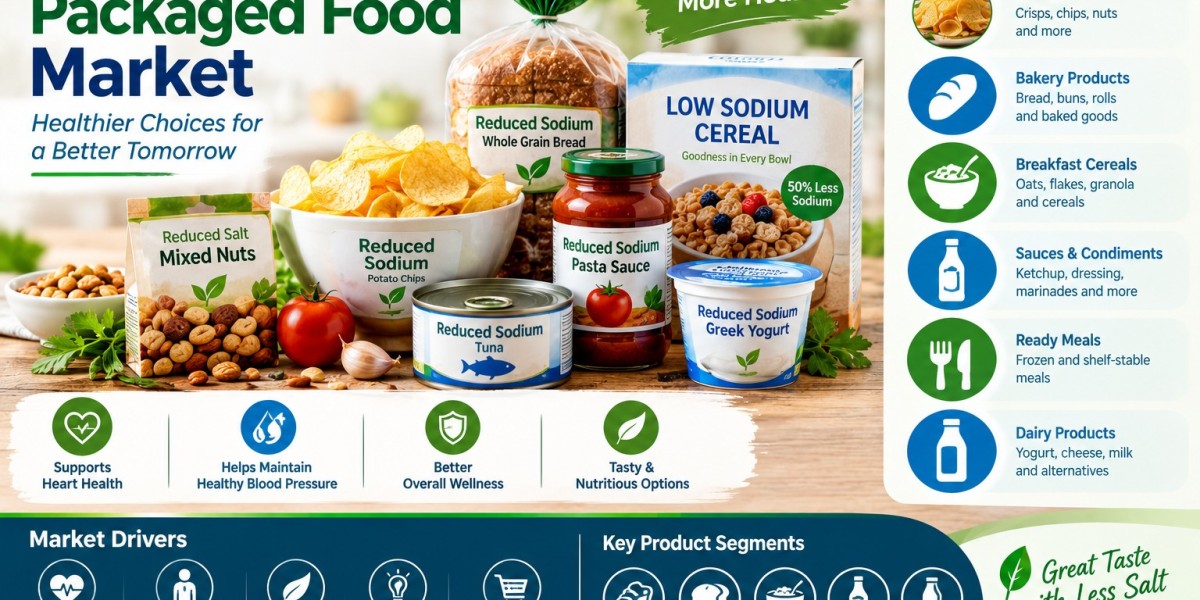

The Reduced Salt Packaged Food Market is becoming closely connected with innovation across the modern food industry. As consumers rethink their everyday eating habits, manufacturers are exploring ways to provide convenient packaged foods that align with evolving expectations around nutrition and wellness. The shift toward reduced salt formulations is encouraging companies to reconsider recipes, ingredients, flavor systems, packaging, and communication strategies. This transformation is creating an environment where product development is increasingly focused on balancing convenience with consumer expectations for better food choices.
The growing interest in reduced sodium packaged meals illustrates how health-conscious preferences can influence different areas of packaged food development. Reduced salt concepts can be incorporated into products intended for quick meals, snacks, side dishes, sauces, and other everyday consumption occasions. By providing familiar products in alternative formulations, manufacturers can make it easier for consumers to explore healthier food options without changing their entire lifestyle.
One of the most important developments in this market is the increased attention given to formulation. Reducing salt requires more than simply adjusting one ingredient. Food developers must consider how the change affects taste, aroma, texture, stability, and the overall eating experience. This creates opportunities for research into alternative ingredients and flavor combinations. Herbs, spices, vegetables, natural flavor components, and other culinary elements can contribute to a more complex taste profile.
The development process can also encourage manufacturers to understand consumer preferences more deeply. Different consumer groups may respond differently to changes in flavor intensity, texture, packaging, and preparation methods. Product testing and consumer feedback can help companies understand which characteristics are most important. This can support more targeted product development and reduce the risk of introducing products that do not meet expectations.
Another major trend is the growing importance of ingredient transparency. Consumers increasingly want to understand what they are buying. Packaging that communicates ingredient information clearly can support confidence and simplify purchasing decisions. Reduced salt positioning can be integrated into broader product communication that discusses flavor, ingredients, convenience, and product usage.
Digital platforms are also changing how consumers discover packaged foods. Online grocery stores and brand websites can provide more information than traditional shelf displays. Consumers can read descriptions, explore product ingredients, compare alternatives, and find recipes. This creates new opportunities for reduced salt brands to educate consumers about how products can fit into everyday meals.
Social media can further influence product discovery. Food content creators, recipe communities, and wellness-focused discussions can increase awareness of new products and preparation ideas. Consumers may discover reduced salt products through meal inspiration rather than through traditional advertising. This makes digital communication an increasingly relevant component of product marketing.
Packaging itself can become part of the innovation strategy. Resealable pouches, convenient containers, easy-open formats, and practical serving designs can improve the usability of packaged food. When combined with clear nutritional communication, packaging can reinforce the product's health-conscious identity. Manufacturers may also explore packaging materials that support freshness and responsible resource use, helping brands respond to multiple consumer expectations simultaneously.
Retailers have an important role in making these products accessible. Product placement can influence consumer discovery, particularly when reduced salt options are positioned alongside familiar conventional products. Online retailers can use search tools and filters to help consumers identify products according to dietary preferences. These approaches can reduce the effort required to find suitable choices.
The market also creates opportunities for smaller food brands. Large companies have established distribution networks and broad product portfolios, but smaller businesses can compete through specialization, unique flavors, transparent ingredient choices, and focused product concepts. Reduced salt products can therefore support innovation across both established and emerging food companies.
Food service applications may provide another avenue for development. Professional kitchens can use reduced salt packaged ingredients as part of menu preparation. Catering services and institutional food providers may also seek products that help them address changing consumer expectations. This can broaden the market beyond household grocery purchasing.
As the food industry continues to evolve, reduced salt products are likely to remain connected with larger trends such as wellness, ingredient transparency, convenience, digital shopping, and food innovation. The most important opportunity is not simply to create products with less salt, but to create products that consumers genuinely want to purchase and enjoy.
The Reduced Salt Packaged Food Market therefore represents a broader transformation in food product development. Companies are being encouraged to look at the complete consumer experience, from formulation and flavor to packaging and communication. This holistic approach can help reduced salt foods become part of everyday eating patterns rather than remaining a specialized category.
FAQs
FAQ 1: How are manufacturers improving reduced salt food products?
Manufacturers can explore alternative seasonings, herbs, spices, flavor combinations, ingredient adjustments, and formulation techniques to create satisfying products with reduced salt.
FAQ 2: Why is packaging important for reduced salt products?
Packaging helps communicate product characteristics, provide ingredient information, improve convenience, and make reduced salt choices easier for consumers to identify.