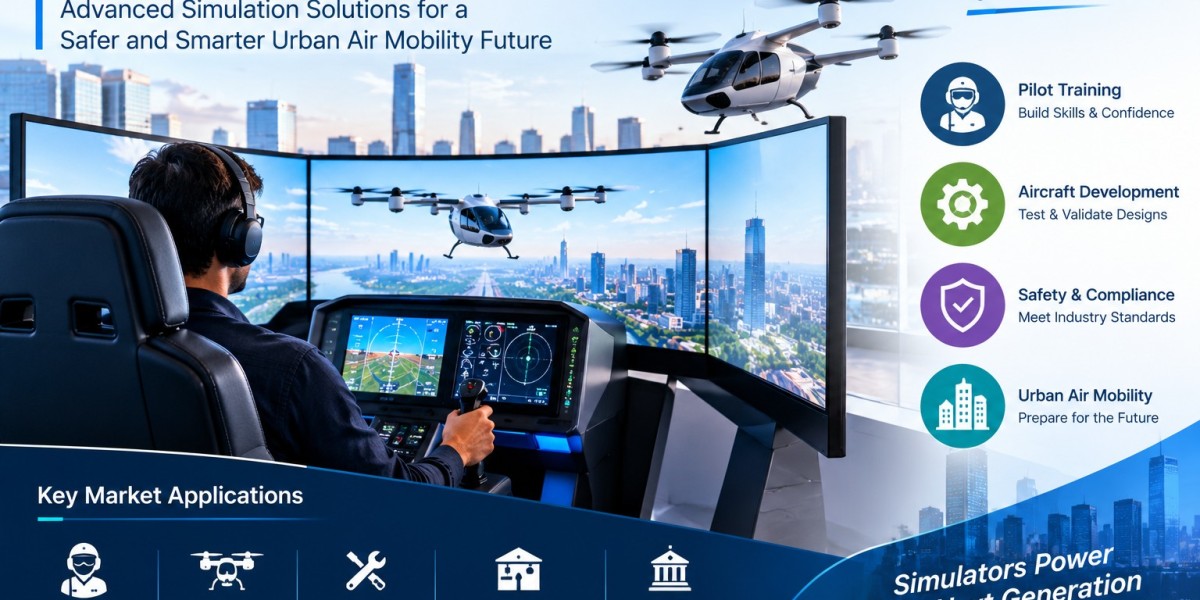

The eVTOL Simulator Market is becoming an important part of the evolving aviation technology landscape. Electric vertical takeoff and landing aircraft are introducing new concepts in flight operations, pilot training, aircraft development, and urban mobility. As these aircraft combine characteristics associated with vertical flight, electric propulsion, advanced controls, and digital systems, simulation can provide a controlled environment for learning and experimentation. eVTOL simulators can support aviation professionals by allowing them to understand aircraft behavior without relying entirely on physical flight activities.
The growing focus on eVTOL flight simulation training is creating opportunities for simulator developers to create realistic and flexible training environments. eVTOL flight simulation training These solutions can reproduce different flight situations, operational environments, aircraft responses, and control characteristics. Such capabilities make simulation useful for familiarization, procedural learning, research, and preparation before actual aircraft operations.
One of the major areas of interest in the eVTOL Simulator Market is pilot training. eVTOL aircraft can have operating characteristics that differ from conventional aircraft, particularly during takeoff, transition, hovering, landing, and other specialized flight phases. Simulator-based training gives pilots an opportunity to repeatedly practice these situations in a controlled environment. Training programs can also introduce different weather conditions, operational situations, and emergency scenarios without exposing aircraft or personnel to unnecessary physical risks.
Simulation can also contribute to aircraft development. Engineers can use virtual environments to examine aircraft responses and control systems during different operating conditions. Before an aircraft enters physical testing, simulation can help teams identify areas requiring additional evaluation. This creates a connection between simulator technology and the broader aircraft development process. As eVTOL designs continue to evolve, flexible simulation platforms can become useful for evaluating changes in aircraft architecture, controls, software, and operational procedures.
Virtual reality and augmented reality technologies are also influencing the development of modern simulator experiences. Immersive systems can create a more engaging environment for users by placing them within a digitally generated cockpit or operational setting. These technologies can help users interact with flight controls, observe aircraft surroundings, and practice procedures in a simulated environment. The combination of immersive visualization and realistic aircraft modeling can make simulator-based learning more interactive.
Another important development is the increasing role of software. Modern simulation systems can combine aircraft models, environmental conditions, flight controls, data analysis, and visualization within integrated platforms. Software-based simulation can provide flexibility for training organizations, research institutions, and aviation developers. It can also support updates as aircraft configurations and operational requirements change.
The eVTOL Simulator Market is therefore connected to several areas of aviation innovation. Training organizations can use simulation to prepare future pilots, while manufacturers can apply it during development and testing. Educational institutions can use simulator environments to introduce students to advanced aviation concepts, and research teams can explore new flight behaviors and operational scenarios.
As urban air mobility concepts continue to develop, simulation technology is expected to remain an important supporting tool. The ability to practice, test, analyze, and refine aviation activities in a controlled digital environment gives eVTOL stakeholders greater flexibility. Future simulator solutions may increasingly combine immersive interfaces, sophisticated flight models, digital aircraft systems, and intelligent software features.
The future of the eVTOL Simulator Market will depend on how effectively simulation technologies adapt to changing aircraft designs and training requirements. As electric aviation develops, simulators can help bridge the gap between theoretical learning and practical experience. Their role can extend beyond pilot training into aircraft design, testing, research, education, and operational preparation.
FAQs
FAQ 1: What is an eVTOL simulator?
An eVTOL simulator is a digital or physical simulation system designed to recreate the flight experience and operating characteristics of electric vertical takeoff and landing aircraft.
FAQ 2: Why are eVTOL simulators useful for aviation training?
They provide a controlled environment where pilots can practice flight procedures, aircraft controls, and different operational situations before or alongside real-world training.