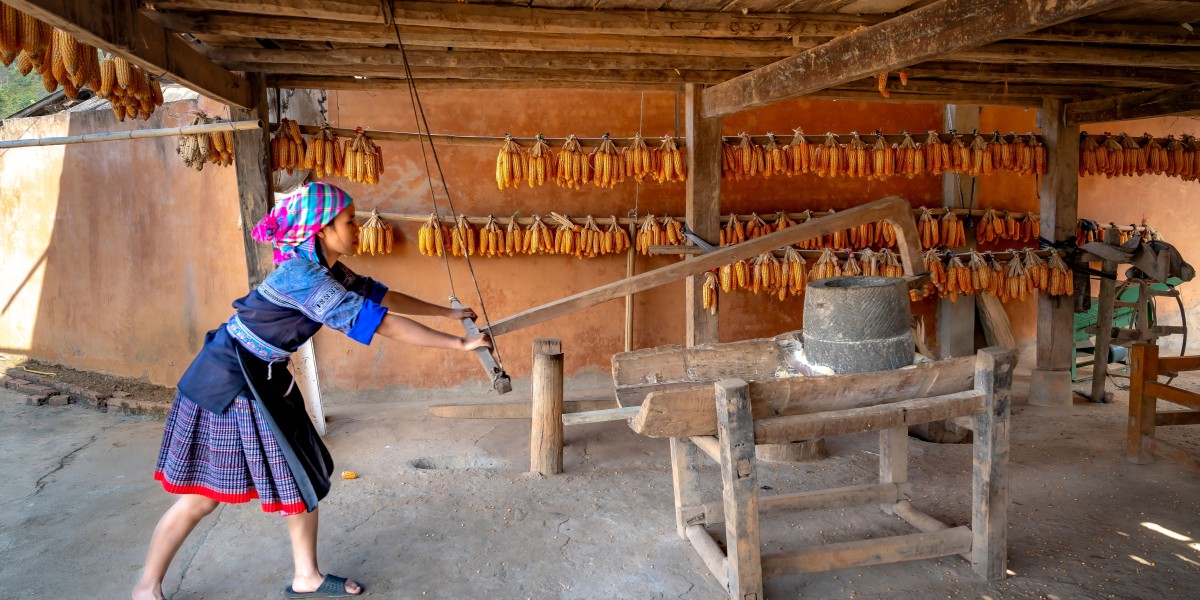

The dry milling market plays an important role in the agricultural and food processing industries by supporting the transformation of grains into useful ingredients and finished products. Dry milling is a processing technique that separates and reduces grain materials into different components without using water as the primary processing medium. This method is widely associated with grains such as corn, wheat, rice, and other agricultural commodities. As food manufacturers continue to focus on ingredient quality, processing efficiency, and product consistency, dry milling remains an important part of modern food production. Its applications extend across food manufacturing, animal nutrition, industrial processing, and ingredient development.
The growing interest in grain processing technology reflects the importance of efficient grain transformation in modern manufacturing environments. Food producers increasingly depend on processing methods that help maintain the functional properties of raw materials while creating ingredients suitable for different applications. Dry milling supports this requirement through mechanical operations that include cleaning, grinding, screening, separating, and refining. These processes allow manufacturers to obtain different grain fractions according to their intended applications. The flexibility of these operations makes dry milling an important processing solution for businesses serving diverse end-use industries.
One of the major characteristics of dry milling is its ability to produce different ingredients from a single agricultural input. Grain materials can be processed into flour, meal, grits, bran, and other intermediate products depending on the grain type and processing requirements. These ingredients serve different purposes in food manufacturing. Flour is commonly used in bakery products, while grain meals and grits can be incorporated into breakfast foods, snacks, and other processed food categories. This versatility allows manufacturers to develop products that address changing consumer expectations and evolving market preferences.
Technological developments are also influencing the way dry milling facilities operate. Modern processing equipment is designed to improve material handling, grinding consistency, separation accuracy, and overall production efficiency. Automated systems help operators monitor processing activities and maintain consistent operating conditions. Improvements in screening and classification technologies also support the production of ingredients with specific particle characteristics. As manufacturers focus on product uniformity, equipment innovation is becoming an important consideration when upgrading existing processing facilities.
Another important factor supporting the relevance of dry milling is the growing demand for convenient and processed food products. Consumers increasingly purchase products that offer convenience, versatility, and consistent quality. Grain-based ingredients are used in numerous food categories, including baked goods, breakfast cereals, snack products, and ready-to-prepare meals. Dry milling helps manufacturers obtain the basic ingredients required for these applications. Its contribution to food ingredient manufacturing makes it closely connected with developments across the broader packaged food industry.
Animal feed production also represents an important application area. Different grain fractions can be incorporated into feed formulations to support livestock and poultry nutrition. Processing helps manufacturers create ingredients with characteristics suitable for different feed applications. The ability to handle various agricultural materials gives dry milling facilities flexibility when supplying ingredients to food and agricultural businesses.
The competitive environment of the dry milling market is influenced by equipment performance, raw material availability, processing capabilities, and product quality. Manufacturers must consider operational efficiency while responding to changing customer requirements. Businesses investing in equipment modernization and improved processing practices may strengthen their ability to serve different industrial applications.
Looking ahead, the dry milling market will continue to be influenced by changing food consumption patterns, agricultural developments, and manufacturing innovation. Companies that focus on product consistency, processing flexibility, and efficient resource utilization can remain relevant in an evolving industry. As grain-based ingredients continue to support numerous manufacturing activities, dry milling will maintain an important position within the global food processing ecosystem.
FAQs
Q1. What is dry milling?
Dry milling is a grain processing method that uses mechanical operations such as grinding, screening, and separation to transform grains into flour, meal, grits, and other useful ingredients.
Q2. Where is dry milling commonly used?
Dry milling is commonly used in food manufacturing, bakery production, breakfast cereal manufacturing, snack processing, animal feed production, and other grain-based industrial applications.