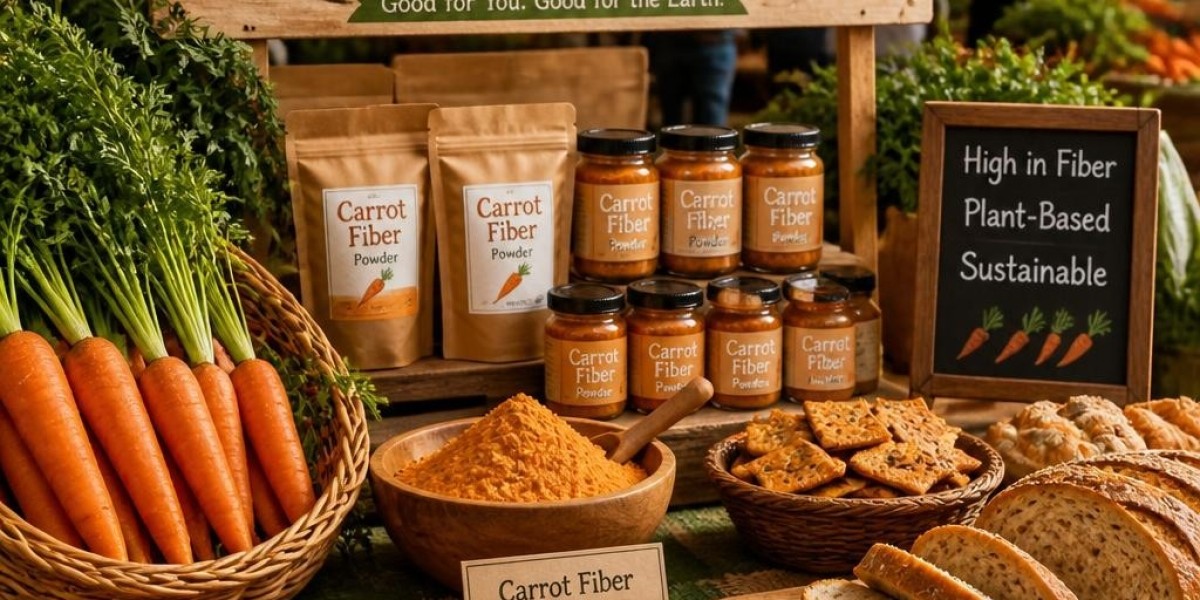

The food industry is continuously evolving as manufacturers explore ingredients that support changing consumer preferences and product development requirements. Growing interest in plant-derived ingredients has encouraged businesses to consider alternatives that offer versatility across different food applications. Carrot fiber is becoming an interesting ingredient in this environment because it can be incorporated into various food formulations. Its connection with vegetable-based ingredients and functional food development is attracting attention from food manufacturers, ingredient suppliers, and product developers.
The increasing interest in natural dietary fiber ingredients reflects the changing approach toward ingredient selection within the food industry. Carrot fiber offers manufacturers an opportunity to incorporate vegetable-derived components into different products while exploring formulation possibilities. Its potential applications across bakery products, snacks, processed foods, and other food categories make it relevant to businesses seeking versatile plant-based ingredients.
Growing Interest in Plant-Based Ingredients
Consumers are becoming increasingly interested in food products containing recognizable and plant-derived ingredients. This preference has encouraged manufacturers to explore vegetable-based components that can support different product formulations.
Carrot fiber fits into this development because it originates from carrots and can be used as an ingredient in various food applications. Manufacturers can consider incorporating it into products where fiber content and ingredient functionality are important formulation considerations.
The growing interest in plant-based food ingredients also creates opportunities for ingredient processors. Businesses can focus on developing carrot fiber products suitable for different manufacturing requirements.
Applications in the Food Processing Industry
Carrot fiber has potential applications across several food categories. Bakery manufacturers may explore its use in bread, crackers, biscuits, and other baked products. It can also be considered for snack formulations and processed food applications.
Food developers frequently look for ingredients that can support product consistency and formulation requirements. Vegetable-derived fibers may provide opportunities to experiment with texture and ingredient combinations.
The versatility of carrot fiber allows manufacturers to explore different applications depending on their product development objectives.
Importance of Functional Properties
Ingredient functionality plays an important role in food manufacturing. Carrot fiber can be considered for applications where water absorption, texture management, and formulation characteristics are relevant.
Manufacturers need to understand how an ingredient behaves within different recipes. Its performance may depend on the product formulation, processing conditions, and intended application.
Food companies that evaluate ingredient functionality carefully can identify suitable applications and develop products that meet customer expectations.
Opportunities for Product Innovation
Innovation is creating opportunities for businesses operating in the carrot fiber segment. Manufacturers can explore different product formats, ingredient combinations, and processing approaches.
Carrot fiber may be incorporated into vegetable-based formulations and other food products where plant-derived ingredients are preferred. Companies can also explore its use in specialized food categories to diversify their product portfolios.
Ingredient suppliers can support these developments by offering products that meet different manufacturing specifications.
Role of Quality and Processing
Quality management is essential for maintaining the consistency of carrot fiber products. Manufacturers need to consider raw material selection, vegetable preparation, processing, drying, and packaging.
These processes can influence the characteristics of the final ingredient. Consistent quality is particularly important for food manufacturers that rely on stable ingredient performance across different production batches.
Suitable packaging and storage practices can also help maintain product condition throughout distribution.
Future Market Opportunities
The Carrot Fiber Market is connected with broader developments in plant-based ingredients, functional food formulations, and food processing innovation.
Manufacturers that focus on ingredient quality, product diversification, and customer requirements may discover opportunities across different food categories. Increasing interest in vegetable-derived ingredients can also encourage additional product development activities.
Conclusion
Carrot fiber represents an interesting ingredient category within the evolving food industry. Its plant-based origin and potential applications across different food products provide opportunities for manufacturers, suppliers, and product developers.
As food companies continue exploring versatile ingredients, carrot fiber may become increasingly relevant to product innovation and changing formulation preferences.
FAQs
Q1. What is carrot fiber used for?
Carrot fiber is used as a vegetable-derived ingredient in applications such as bakery products, snacks, processed foods, and other food formulations.
Q2. Why are food manufacturers interested in carrot fiber?
Manufacturers are interested in its plant-based origin, formulation versatility, and potential functional properties in different food applications.



