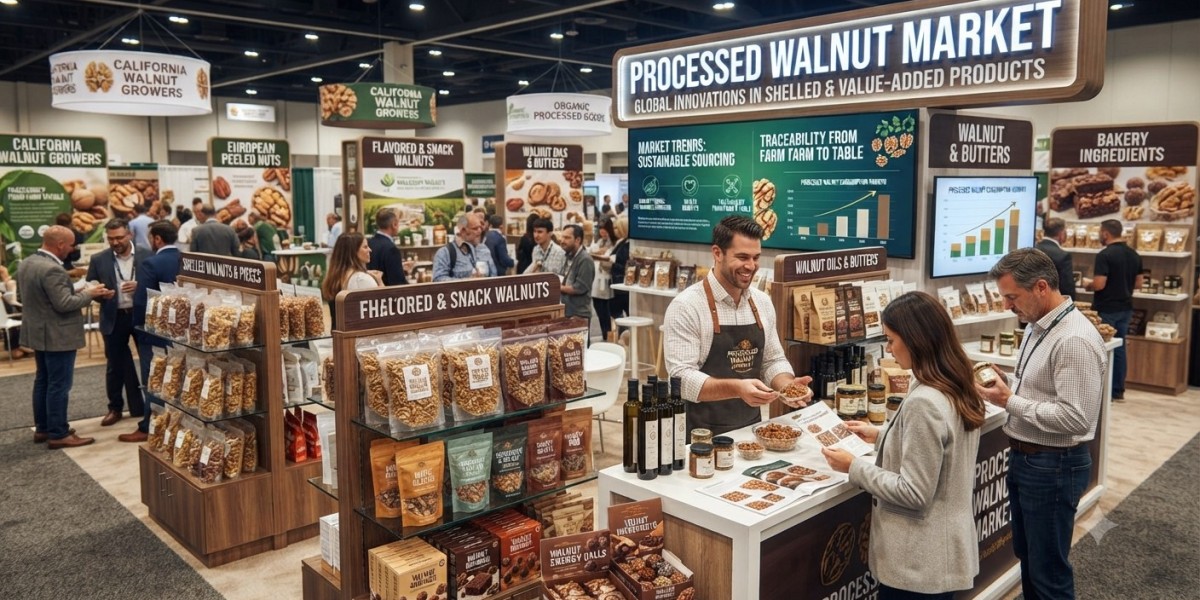

Innovation is becoming an important factor in the development of the processed walnut market. As food manufacturers and consumers seek more convenient and versatile ingredients, walnut processors are exploring improvements across production, product development, quality management, and packaging. Traditional walnut processing remains important, but modern manufacturing approaches are creating opportunities for more specialized products.
The transformation of the industry is closely connected with improvements in processing equipment and changing food applications. Businesses are increasingly interested in walnut kernel processing technology because efficient processing can support product consistency, improve handling, and help manufacturers serve different commercial requirements. These developments are influencing how processors approach production and compete in the wider nut industry.
Modernization of Walnut Processing
Walnut processing involves several activities that prepare harvested walnuts for commercial use. These activities can include cleaning, drying, cracking, shell separation, sorting, grading, and packaging.
Modern processing equipment can help businesses manage these operations more consistently. Automated sorting and grading systems can support the separation of kernels according to their appearance, size, and quality characteristics.
Improved shelling equipment can also help processors obtain usable kernels while minimizing unnecessary breakage. This is particularly relevant for manufacturers supplying whole kernels and walnut halves to premium food applications.
Processing facilities must select equipment according to their product requirements, production methods, and quality standards.
Automation and Operational Efficiency
Automation is creating opportunities for improved manufacturing operations. Processing businesses can explore equipment that supports material handling, product inspection, sorting, and packaging.
Automated systems can reduce repetitive manual activities and support consistent production workflows. They can also help manufacturers organize operations more effectively.
However, automation requires appropriate planning. Businesses need to consider equipment maintenance, employee training, production requirements, and compatibility with existing facilities.
Combining skilled personnel with suitable processing technology can help manufacturers maintain quality while improving operational efficiency.
Product Diversification and Value Addition
Product diversification is another important innovation area. Instead of supplying only conventional walnut kernels, processors can explore different finished products and ingredient formats.
Roasted walnuts provide a distinctive flavor profile and can be marketed as convenient snacks. Chopped walnuts serve food manufacturers that require ingredients for bakery and confectionery production.
Walnut flour offers another area for product development, particularly in specialty baking and alternative food formulations. Walnut oil also provides opportunities in culinary applications and selected personal care products.
Manufacturers can explore different packaging sizes, flavor profiles, and product combinations to serve varied customer requirements.
Packaging and Storage Improvements
Packaging plays an important role in processed walnut quality. Walnuts contain natural fats, making appropriate storage and protective packaging particularly important.
Exposure to air, moisture, heat, and unsuitable storage conditions can affect product freshness. Manufacturers therefore need to select packaging solutions that help protect walnut products during transportation, storage, and retail distribution.
Resealable packs, protective barrier materials, and suitable bulk packaging can serve different commercial applications.
Packaging innovation can also improve convenience and product presentation. Clear labeling and appropriate product information help consumers and industrial buyers understand the product's characteristics.
Quality Control and Food Safety
Quality control is essential throughout walnut processing. Raw material inspection, equipment sanitation, sorting, packaging checks, and finished product evaluation all contribute to product reliability.
Processors must establish suitable food safety procedures and maintain hygienic manufacturing environments. Proper employee training and routine equipment maintenance can support consistent operations.
Traceability also plays an important role. Maintaining clear production and handling records can help businesses manage their supply chains and respond to quality concerns.
Sustainability and Responsible Manufacturing
Environmental considerations are influencing food processing businesses. Walnut processors can explore ways to use resources efficiently, reduce unnecessary waste, and improve packaging practices.
Responsible management of processing by-products may also create opportunities for improved resource utilization, subject to appropriate safety and quality requirements.
Businesses can review energy consumption, water use, equipment efficiency, and transportation practices as part of their operational improvement strategies.
Conclusion
Innovation is reshaping the processed walnut market through improvements in processing equipment, automation, product diversification, packaging, and quality management. Manufacturers that adopt suitable technologies and focus on consistent product quality can improve their operations and respond to changing customer requirements. Continued investment in responsible manufacturing and product development can support the long-term development of the global nut industry.
Frequently Asked Questions
Q1. What technologies are used in walnut processing?
Walnut processing facilities use cleaning, drying, cracking, shell separation, sorting, grading, roasting, and packaging equipment.
Q2. Why is packaging important in the processed walnut industry?
Appropriate packaging helps protect freshness, maintain product quality, support convenient storage, and improve the consumer experience.



