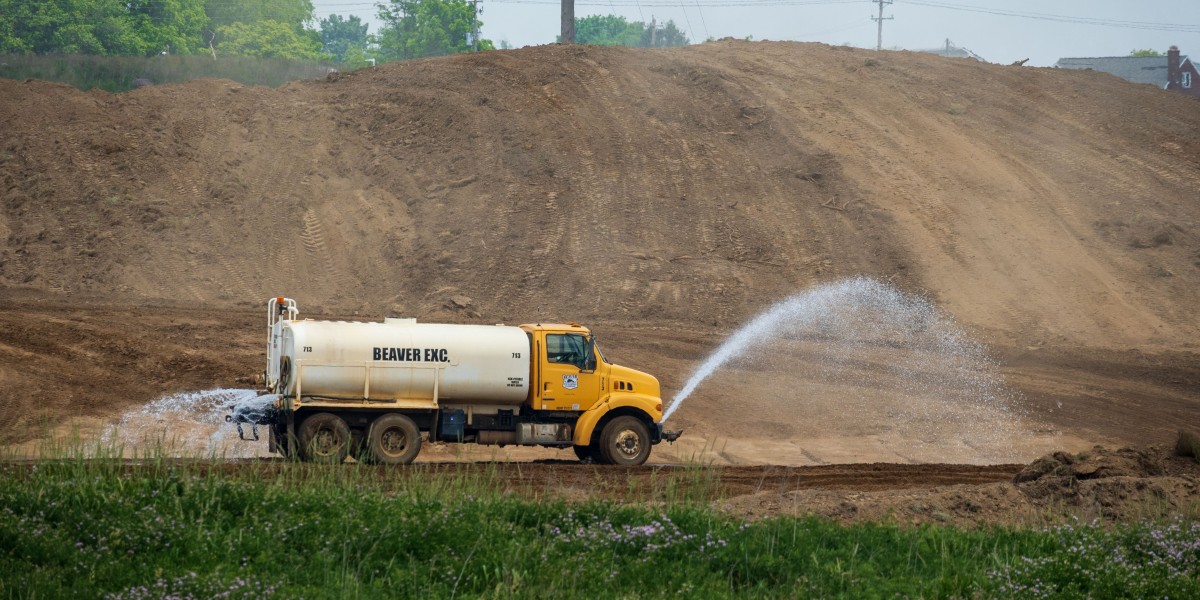

The soil stabilization market supports construction projects that require reliable ground conditions for buildings, transportation facilities, industrial developments, and other infrastructure. The quality of the underlying soil is a major consideration during site preparation because it influences the suitability of the land for different engineering applications. When natural soil does not meet project requirements, contractors and engineers may evaluate stabilization techniques to improve its characteristics. These methods can help address problems involving soil strength, workability, moisture sensitivity, and compaction.
A closely related concept is foundation soil engineering, which examines the relationship between ground conditions and the performance of structures. Before construction begins, geotechnical professionals assess the soil to determine whether it can support the proposed development or requires improvement. Soil stabilization may be one option, depending on the findings of the investigation, the foundation design, and the anticipated loads. Its purpose is to make the ground more suitable for a defined application rather than to provide a universal solution for every construction site.
Why Ground Conditions Matter for Foundations
Foundations transfer structural loads to the supporting ground. If the soil has unsuitable engineering properties, a project may face challenges related to settlement, bearing capacity, moisture changes, or construction operations.
The nature of these challenges varies according to soil type and environmental conditions. Certain clay-rich soils can change volume as moisture conditions change. Loose soils may require improved density or other forms of ground treatment. Fill materials may also need evaluation to establish whether they meet the requirements of the intended development.
A geotechnical investigation helps determine the characteristics of the ground and guides the design process. Soil stabilization may be considered when treatment can provide the required improvement. In other situations, alternative foundation designs or different ground-improvement methods may be more appropriate.
The decision must be based on engineering analysis rather than the assumption that every weak soil can be corrected using the same treatment.
Common Soil Stabilization Solutions
Mechanical stabilization focuses on improving the physical arrangement or composition of soil. Depending on the material, this may involve blending different soil fractions, adjusting moisture content, and applying suitable compaction methods.
Chemical stabilization involves adding materials that modify soil properties. Lime and cement are established options for certain soil conditions, although their effectiveness depends on compatibility and the project's requirements.
Other approaches may include specialized binders, reinforcement materials, or treatment methods developed for particular ground conditions. Their suitability must be established through appropriate testing.
The goal is to select a method that meets the required engineering performance while accounting for construction practicality, material availability, environmental considerations, and long-term behavior.
Applications in Building and Industrial Development
Soil stabilization can be relevant during preparation for commercial buildings, warehouses, industrial facilities, and supporting infrastructure. These developments often require ground that meets defined specifications before foundations, slabs, access roads, and external working areas are constructed.
Industrial sites may include vehicle routes, storage areas, equipment foundations, and large paved surfaces. Each area can have different performance requirements, making site assessment and appropriate treatment selection important.
Commercial developments may also require earthworks across areas where soil properties vary. Stabilization can be considered for selected sections when the existing material can be improved to meet project requirements.
Nevertheless, ground stabilization does not replace foundation design. Engineers must still determine the appropriate foundation type and assess issues such as settlement, groundwater, structural loads, and the overall behavior of the ground.
The Importance of Testing and Quality Control
Reliable soil stabilization begins with understanding the material being treated. Soil sampling and laboratory testing help establish properties that influence the selection of treatment methods.
Depending on the project, testing may examine moisture content, particle-size distribution, plasticity, compaction behavior, strength, and other relevant characteristics. The results help determine whether a proposed stabilizing material is suitable.
Quality control continues during construction. Contractors must follow the specified mixing procedures, manage moisture conditions, achieve the required compaction, and verify that the treated ground meets the design criteria.
Documentation is also important because it allows project teams to record construction activities and testing results. If unexpected soil conditions appear during the work, the treatment plan may need to be reviewed by the responsible engineer.
Environmental Considerations in Ground Improvement
Environmental responsibility is increasingly relevant to construction planning. Stabilization may offer opportunities to reuse suitable existing soil and reduce the need for excavation and replacement materials.
However, the environmental impact depends on the method used. The production and transportation of binders, changes in soil chemistry, and the potential movement of treatment-related substances must be considered where relevant.
Alternative materials can be evaluated when they meet the project's technical and environmental requirements. Proper testing is essential before adopting an unfamiliar binder or additive.
A responsible approach balances construction performance, material efficiency, environmental protection, and compliance with applicable regulations.
Market Opportunities and Future Developments
Infrastructure construction, commercial development, and industrial expansion continue to create requirements for effective site preparation. Soil stabilization can help address these needs where the existing ground is suitable for treatment.
Future developments may include improved stabilization materials, more precise testing methods, better mixing equipment, and enhanced construction monitoring. These improvements may help project teams select treatments more accurately and maintain consistency during implementation.
The market's development will depend on construction activity, investment in infrastructure, material availability, environmental expectations, and the ability of contractors to deliver dependable results.
In conclusion, soil stabilization offers useful solutions for improving ground conditions across a wide range of construction applications. Its effectiveness depends on proper investigation, engineering design, suitable materials, and careful execution. By integrating these elements, construction teams can make informed decisions about preparing the ground for dependable infrastructure and development projects.
FAQs
Q1. Can soil stabilization be used before building construction?
Yes. It may be used during site preparation when geotechnical investigations indicate that treating the existing soil can help achieve the required ground conditions.
Q2. Is soil stabilization suitable for every foundation problem?
No. Some problems require alternative foundation designs or other ground-improvement methods. A qualified geotechnical engineer should evaluate the site and determine the appropriate solution.



